Microcontrollers, RF Chips and System‑on‑Chips: The Hardware Behind the mioty® Stack
The mioty® stack is a flexible solution that can be tailored to your specific IoT applications. In part 1 of our article series, we introduced the stack’s features, implemented standards, and available stack packages.
In part 2, we shift the spotlight to the hardware that enables devices to communicate via mioty® and to the certification options that play a crucial role in ensuring successful product deployment.
The mioty® stack has already been ported to a wide range of hardware platforms consisting either of a microcontroller (MCU) in combination with a radio transceiver (TRX) or a System‑on‑Chip (SoC). Hardware selection is based on tested reference platforms on which the stack has been successfully validated.
However, the mioty® stack is fundamentally hardware‑agnostic: With our Porting Service, we can adapt the stack to your target hardware and perform all necessary tests to ensure stability and interoperability.

Overview about off-the-shelf stacks and hardware platforms
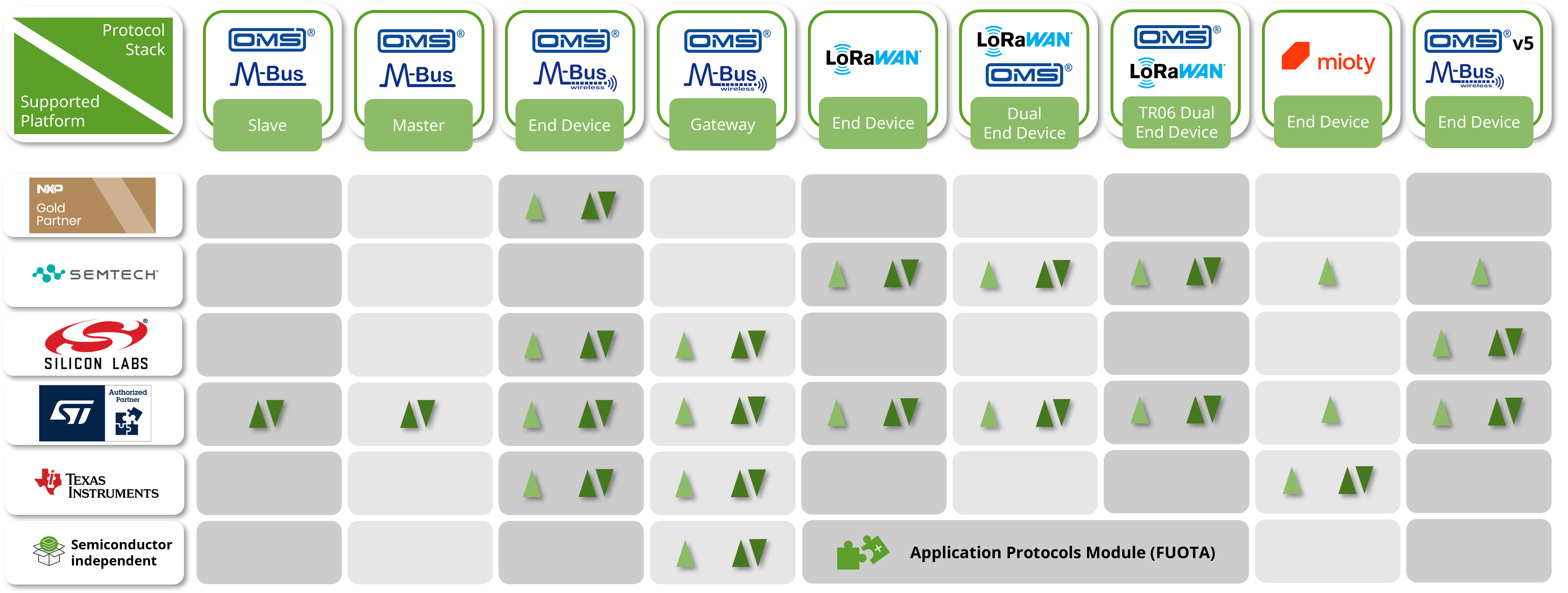
Note: The list is constantly growing. Hardware not listed can be checked upon request.
Hardware requirements for the Protocol Stack
To guarantee smooth operation across different platforms, the mioty® stack includes a Hardware Abstraction Layer (HAL). The following components are typically interfaced with the protocol stack:
- 1–2 timers
- 1 SPI interface (for dedicated transceivers)
- 2–4 GPIOs (depending on the transceiver used)
- Software RF interface (for System‑on‑Chips)
- AES hardware encryption (if available and supported)
- Hardware CRC engine (if available)
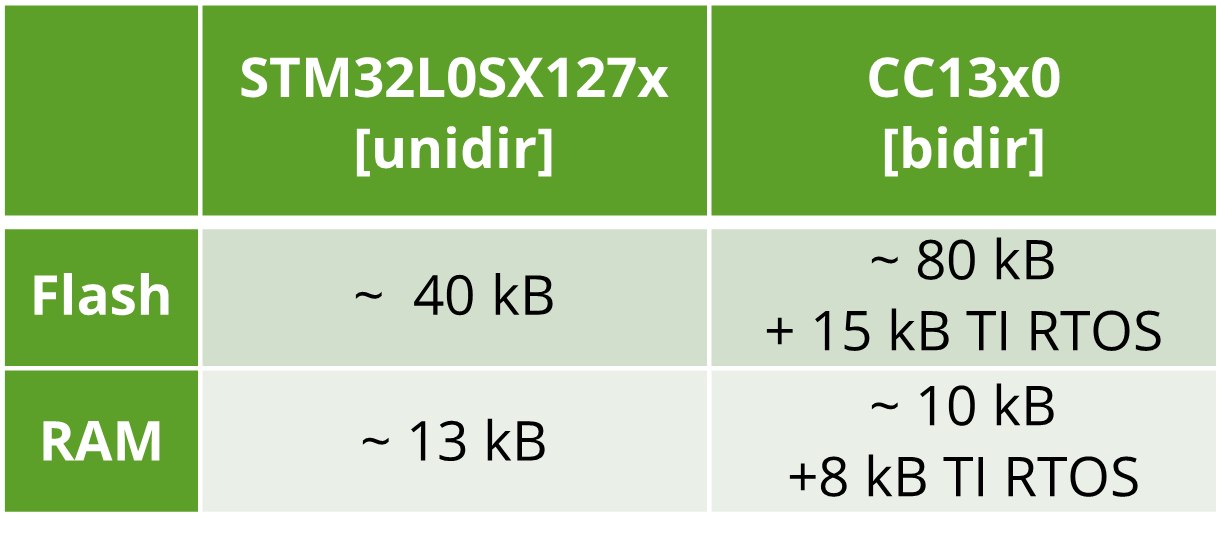
Memory footprint: mioty v1.1.1 End Device Stack
Product Certification: Ensuring Compliance & Interoperability
When equipping your devices with mioty®, product certification is a key consideration. Certification ensures compliance with relevant standards and guarantees interoperability in the field.
Since the mioty® technology is still young, the final certification framework of the mioty® Alliance is currently under development. Nonetheless, this poses no limitation for using the mioty® stack today:
- As an active member of the alliance’s technical committee, STACKFORCE contributes directly to the development of the certification process.
- The stack is pre‑certified on reference platforms.
- Comprehensive cross‑testing ensures interoperability between our end‑node stack and commercially available base stations.
Beyond mioty® certification, conventional product certifications—which differ by region—must also be considered. The STACKFORCE mioty® stack includes integrated RF test features, accessible via a dedicated test mode, enabling verification that the radio performance complies with regulatory limits.
Testing institutes such as TÜV and other accredited laboratories can then grant your product the required certification marks.
Get Started With mioty®
Do you have questions about the mioty® stack or want to integrate the technology into your products?
We’re here to support you with comprehensive insights into implementation, hardware selection, testing, and certification.
Contact us – and make your products mioty®‑ready.