

OMS® v4.3.3 / wM-Bus for End Devices

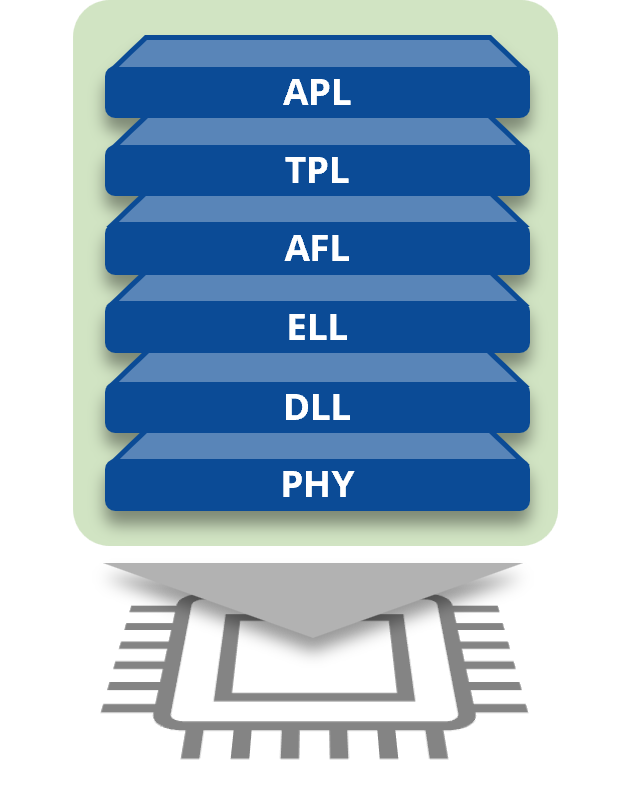
Single Stack

End device

Compliant to EN 13757-3/-4/-7 (Wireless) M-Bus and OMS® Specification

Low complexity and optimization of energy consumption

Bidirectional as well as unidirectional communication possible

Pre-certification on reference hardware platform
OMS® v4.3.3 / wM-Bus for End Devices

The OMS® Stack version 4.3.3 is a well-established and reliable software solution for Wireless M-Bus-based metering applications. It implements all essential protocol elements required for Wireless M-Bus compliance and supports a wide range of features specified in EN 13757 and its sub-standards – with a strong focus on the most relevant and widely used
functionalities.

This product offers a well-balanced combination of compact footprint, excellent modularity, and flexible scalability, making it a solid foundation for smart metering solutions across various use cases. Note: For new developments, we recommend migrating to the newer OMS® Stack version 4.5.1, which includes additional features and ongoing enhancements.

Your benefits with our Protocol Stack Package

Example application available

Example application allowing an easy start-up of the stack

On-the-fly configuration

Quick stack adaption to different use cases

Short time-to-market

With a directly available OMS® v4.5.1 Standard Stack you shorten your time-to-market significantly

Protocol Stack Features

OMS® v4.3.3

EN 13757-3/-4/-7 (Wireless M-Bus) compliant protocol stack for meter

  • Operation modes S, T or C
  • Encryption modes 5 and 7

Compliant to specification OMS® v4.5.1 by OMS® group, referring to EN 13757

  • Security profiles A or B
  • Sicherheitsprofile A und B
  • Annex C „Sensor“ compatibility
  • Enables application to support all use cases specified by Annex M „Requirements for OMS® use case support“

Available for the following hardware platforms

Texas Instruments

CC13x0

Technical Information

Supported Specifications

OMS® v.4.3.3 Protocol Stack compliant according

  • EN 13757-3/-4/-7
  • OMS®​​​​​​ Specification

Texas Instruments CC13x0: CC1310 LaunchPad / LaunchPad CC1350

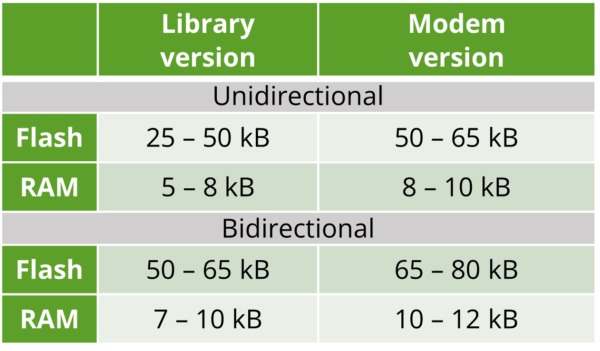
The code sizes described above indicate the typical memory requirements for operating the fully equipped protocol stack as a library, including associated drivers. The values are based on the specified reference hardware

  • Texas Instruments CC13x0: CC1310 LaunchPad / LaunchPad CC1350

Frequently asked Questions

What is included in the STACKFORCE software package?

Our Protocol Stack package includes everything you need for integration:

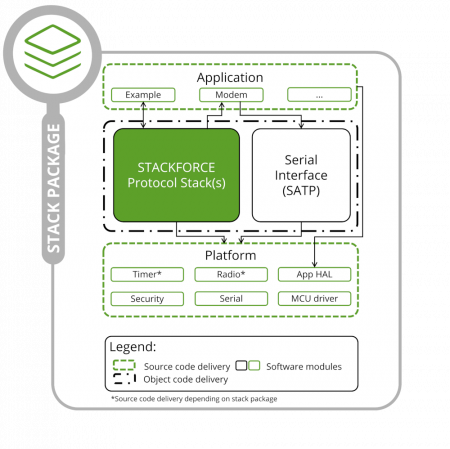
  • Precompiled stack library
  • Hardware-specific drivers
  • Serial interface (UART, SPI, etc.)
  • Power management
  • Example applications for quick integration
  • Documentation

The Protocol Stack itself is delivered as object code and cannot be directly modified. The platform interface (including HAL and RF driver integration) is provided as source code. This allows you to:

  • Adapt the platform driver to your target hardware
  • Configure specific radio settings such as frequencies
  • Optimize driver behavior
  • Add your own components such as security and timers

For further adjustments to the stack itself, we are happy to support you with specific development services.

Yes, that’s possible. In addition to our standard solutions, we offer customer-specific extensions of our Protocol Stacks. This enables us to implement your specific requirements so that the stack integrates seamlessly into your system environment.

We are happy to check compatibility with your specific hardware. If your hardware meets the minimum requirements for running a Protocol Stack, porting is generally possible. We can discuss the porting effort with you or provide our Platform Porting Guide so you can perform the porting yourself.

Yes. You can request a free evaluation license and test the software in your target environment – without obligation and risk-free. More information about the evaluation offer can be found on our website under: Evaluation License.

STACKFORCE uses a multi-stage testing process to ensure high software quality. This includes:

  • Unit, module, and firmware tests to check the functionality and stability of individual components
  • Static code analysis to detect errors and vulnerabilities at an early stage
  • Automated system tests on simulated and real hardware
  • Regression tests to ensure that existing functions continue to work reliably and that no new errors are introduced

License selection

Your hardware manufacturer is not listed?

Contact us – together we will make your project a success.

Commercial Features

Professional first‑level support from experts in embedded connectivity – quick, efficient, and ready to help.

Our protocol stacks undergo extensive testing, ensuring proven reliability across various IoT applications worldwide.

Thanks to our modular, standardized software solutions, configuring embedded systems is simple and hassle‑free.
We deliver all our products with clear manufacturer warranties and comprehensive guarantees for maximum reliability.