LoRaWAN®, mioty®, M-Bus und OMS® v5
Home › Technologies
for industrial IoT
STACKFORCE offers a wide range of energy-efficient radio technologies for industrial IoT applications – optimized for battery-powered devices, long-range communication, and reliable data transmission.
We focus on three established technologies: LoRaWAN®, mioty®, and Wireless M-Bus. Operating in license-free frequency bands, each offers specific strengths and is suited to different use cases, ranging from smart metering and industrial monitoring to smart agriculture and smart city infrastructure.
Additionally, our development services include customized IoT solutions based on other technologies such as 6LoWPAN/TSCH, IEEE 802.15.4, LoRa®, Sigfox, Wi-SUN®, and more.
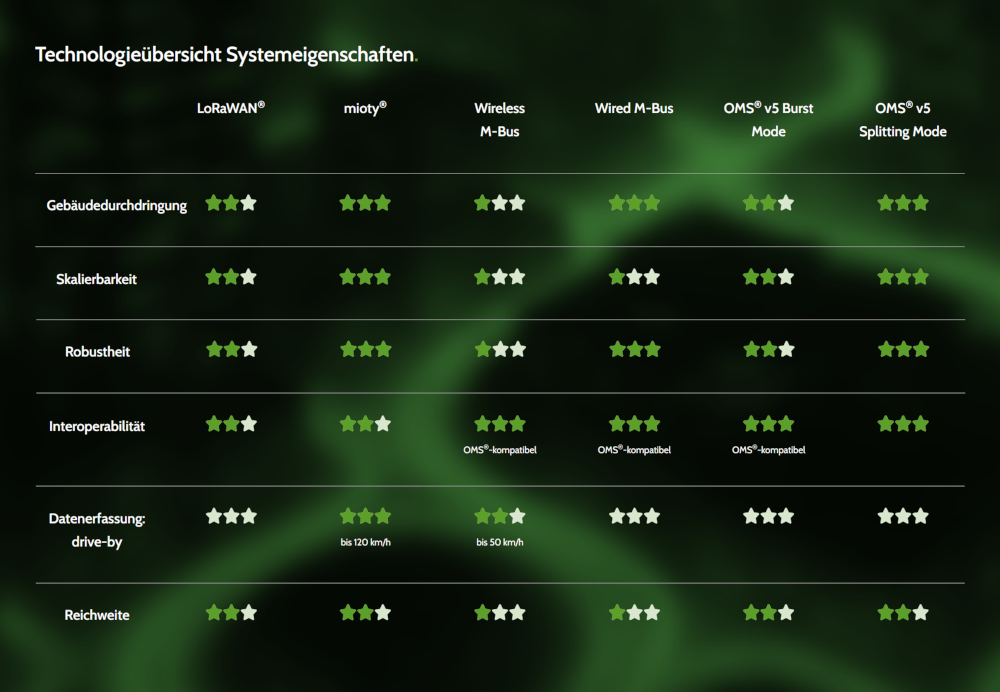
The following comparison highlights the key features of the main technologies in our proto-col stack portfolio. It enables a well-informed decision based on characteristics like range, scalability, robustness, and suitability for various IoT use cases.
LoRaWAN®
mioty®
Wireless
M-Bus
Wired M-Bus
OMS® v5 Burst Mode
OMS® v5 Splitting Mode
Building penetration
Scalability
Robustness
Interoperability
OMS® compatible
OMS® compatible
OMS® compatible
Data collection: drive-by
up to 120 km/h
up to 50 km/h
Range
Technology use according to application.


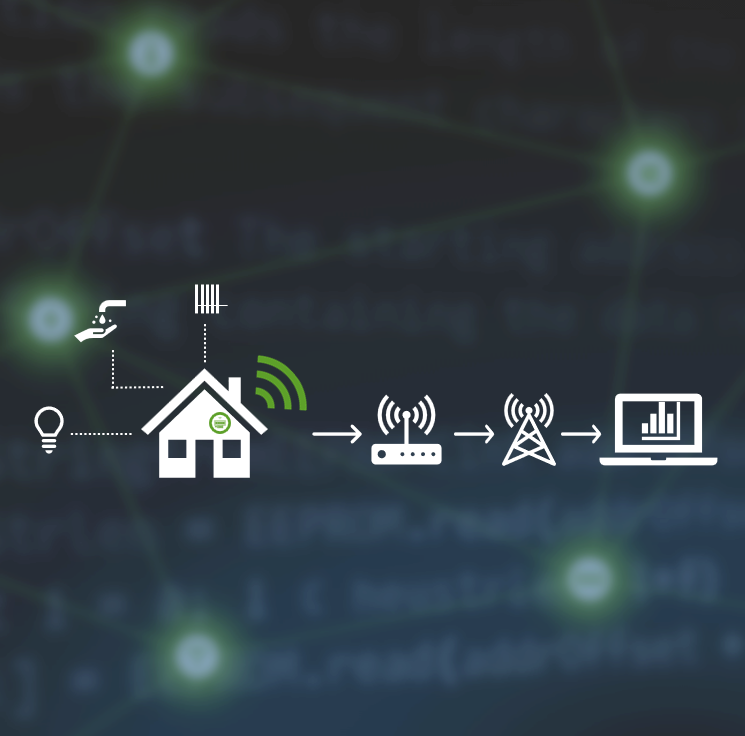


Choosing the best LPWAN technology depends on multiple factors:
Number and type of end devices
Topology and extent of the area of application
Regulatory requirements
Required battery life
Private or public wireless network
Ability to transmit data to drive-by receivers
Amount of data to be transferred
Frequency of data transmission
In many cases, combining multiple technologies is a smart choice – for instance, using LoRaWAN® or mioty® for fixed-network communication and Wireless M-Bus as a fallback option.
Looking for this kind of setup? Check out our Multi-Stack products:
Standardization scope and specification differences
One of the key differences among technologies lies in their level of standardization. LoRaWAN® and mioty® are currently standardized only up to the network layer. Higher protocol layers – such as application logic or data formatting – are typically implemented using proprietary methods, which can hinder interoperability across device vendors.
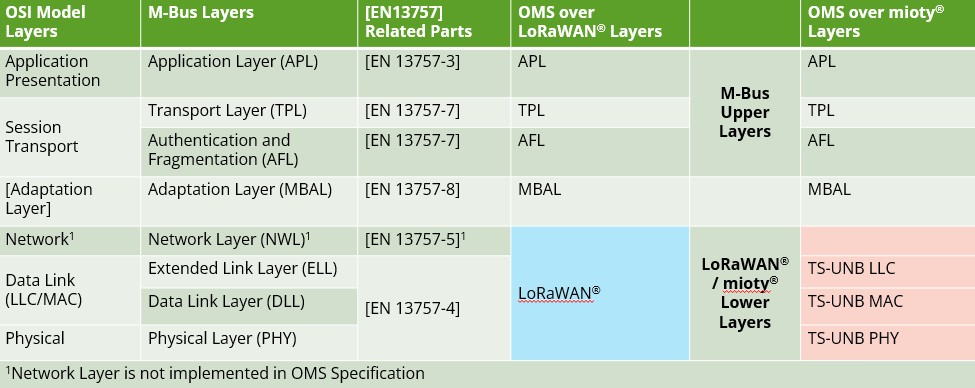
The OMS® Group has long-standing experience in defining communication protocols across all layers, particularly for Wireless M-Bus. This complete standardization ensures manufacturer-independent interoperability – a critical advantage in smart metering.
As part of joint efforts, the LoRa® Alliance and the mioty® Alliance have worked with the OMS® Group to develop full protocol stack specifications, from the physical layer to the application layer. The results are documented in Technical Reports 06 (OMS® over LoRaWAN®) and 08 (OMS® over mioty®), which aim to make LPWAN technologies interoperable for smart metering use cases.
In addition, the OMS® Group has developed its own LPWAN standard with OMS v5.0.1, which incorporates technical advantages from mioty® and defines three different physical layers. This specification is covered separately due to its unique approach.